



In a year where golf simulation has gone from niche to mainstream, one of the world’s leading projection technology brands is stepping firmly onto the tee box. Optoma — a global powerhouse known for its high-performance projectors and visual-display systems — has officially announced a major push into the golf simulation market, signaling just how far this tech-driven corner of the game has come.
From Boardrooms to Fairways: Optoma’s Next Big Play
Long associated with the corporate and educational sectors, Optoma’s pivot toward golf simulation reflects a bigger movement across the entertainment and lifestyle industries. The company’s immersive-projection solutions are now being marketed for luxury homes, high-end golf lounges, hospitality venues, and training centers — delivering a level of visual realism that until recently required six-figure setups and specialized equipment.
By leveraging its cinema-grade projection technology, Optoma is helping transform how players experience golf indoors. The move also illustrates how hardware companies that once specialized in business and home-theater markets are identifying golf as a powerful new category — one that blends sports, data, and entertainment.
Why the Golf Simulation Market Is Exploding
Golf simulation has been on a steep growth trajectory for nearly a decade, but 2025 marks a tipping point. Industry analysts estimate the global simulator market at roughly $2.4 billion today, projected to exceed $6 billion by 2034. Much of that momentum comes from new consumer segments: tech-savvy golfers building home bays, commercial facilities running 24-hour access models, and even hotels and residential towers adding simulator rooms as amenities.
Brands like TrackMan, Foresight, Uneekor, and Full Swing continue to dominate the premium sensor and software side. But companies such as Optoma are now completing the ecosystem — offering large-scale, crystal-clear visual systems that bring those data-driven virtual courses to life. A launch monitor can measure spin, launch angle, and ball speed, but projection quality determines whether the experience feels like Pebble Beach or a PowerPoint presentation.
Immersion Meets Innovation
Optoma’s push is all about immersion — a concept that has redefined gaming, fitness, and now golf. Its latest projectors boast ultra-short-throw lenses, 4K resolution, and high-brightness laser light sources, allowing realistic images even in ambient light. The result is a brighter, more dynamic experience, especially in multi-purpose environments like bars or training studios where total darkness isn’t possible.
In promotional materials, Optoma frames its entry as a response to rising demand for “experiential entertainment.” Their systems can project onto curved or ultra-wide screens, delivering wrap-around visuals that expand the simulated fairway beyond the limits of traditional 16:9 formats. For developers and simulator companies, that’s an invitation to rethink how golf spaces are designed.
The Convergence of Golf, Lifestyle, and Tech
Optoma’s move also speaks to a broader convergence between golf and the smart-home industry. Wealthier consumers are converting basements, garages, and bonus rooms into multi-sport simulation suites — often pairing golf with racing or baseball modules. These setups are increasingly seen as lifestyle investments rather than just training tools.
For commercial operators, immersive projection can set venues apart. From urban “golf lounges” like Five Iron Golf to exclusive members-only clubs, aesthetic quality and visual engagement drive revenue. A sharper, brighter image translates to a more premium customer experience — and more social-media-ready content for marketing.
A Boon for Course Designers and Software Developers
The visual fidelity of Optoma’s projection tech could also reshape virtual course design. With higher color accuracy and brightness levels, developers can render more nuanced lighting, shadows, and textures — creating a truer sense of place. For simulators like E6 CONNECT, GSPro, or TGC 2019, that means golfers might soon recognize familiar course landmarks in far greater detail.
Optoma’s focus on flexibility and scalability is equally important. Their projectors can be ceiling-mounted, floor-mounted, or even stacked for ultra-wide displays, which opens new creative possibilities for developers, instructors, and architects designing multi-bay indoor golf centers.
Sustainability and Efficiency in Tech Design
Beyond image quality, Optoma’s newer laser projectors offer major sustainability gains — consuming up to 45 percent less power than comparable lamp-based systems and boasting lifespans exceeding 30,000 hours. As more facilities aim to reduce operational costs and carbon footprints, energy-efficient hardware becomes part of the brand story.
This matters in the golf world, where sustainability narratives increasingly extend from course management to technology operations. An indoor golf space powered by low-energy laser projectors and LED lighting reinforces the sport’s shift toward more eco-responsible innovation.
Bringing Golf to the Next Generation
Finally, Optoma’s entrance hints at where the next wave of golfers may be found — not necessarily on grass, but in garages, lofts, and lounges. Younger players are drawn to golf’s tech-infused reinvention: short-form play, digital scoring, instant feedback, and shareable moments. By enhancing the realism and excitement of indoor play, Optoma helps bridge that generational gap.
In the same way that Peloton brought spin classes home and Meta brought VR to living rooms, Optoma’s push could make golf simulation more aspirational, accessible, and visually compelling.
Seeing the Future of Golf Clearly
Optoma’s entry into the golf-simulation market isn’t just a product launch — it’s validation. It signals that indoor golf has matured into a serious, sustainable industry attracting major tech brands, real-estate developers, and hospitality partners alike. For a sport historically tied to grass and weather, that’s a seismic shift.
As immersive projection evolves alongside smarter sensors, data analytics, and AR-driven gameplay, the future of golf may not depend on where you play — but on how real it feels when you do. Optoma’s new swing into simulation is proof that the line between technology and tradition has never been blurrier — or more exciting.
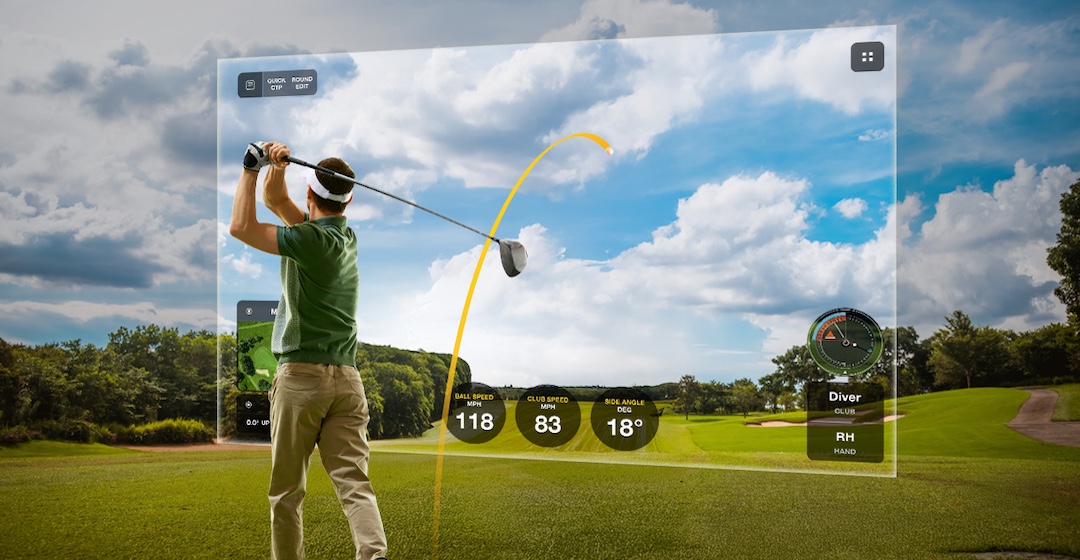
Optoma Swings Into Golf Simulation With Immersive 4K Tech
Optoma enters the golf-simulation space with immersive 4K projection tech, transforming indoor golf into a premium, lifestyle-driven experience.

· 1 month ago